What to do when your dishwasher leaks under the kitchen sink
A dishwasher leak under the kitchen sink can soak your cabinets and subfloor in minutes. Here is the exact order of steps to stop it, dry it, and save the cabinetry.
When your dishwasher leaks under the kitchen sink, shut off the water supply valve and the breaker to the dishwasher before you do anything else, then pull the machine out and start extracting standing water within the first 10 minutes. Water from a dishwasher supply line or drain hose can soak the cabinet base, the toe kick, and the subfloor in under 15 minutes, and mold can begin colonizing wet wood and drywall in 24 to 48 hours. The rest of this post walks through the exact order of steps we use on dishwasher leak calls across Lake Worth Beach, from the shutoff to the drying equipment.
Shut off the water and power first
Shut off the water and power first because a dishwasher leak under the kitchen sink usually involves both a live water line and a 120-volt connection, and you do not want either one active while you are reaching into a wet cabinet.
Here is the order we follow on every call:
- Kill the breaker. The dishwasher is almost always on its own circuit. Flip it at the panel before you touch anything under the sink.
- Close the supply valve. Look for the small shutoff under the sink on the hot water line feeding the dishwasher. Turn it clockwise until it stops.
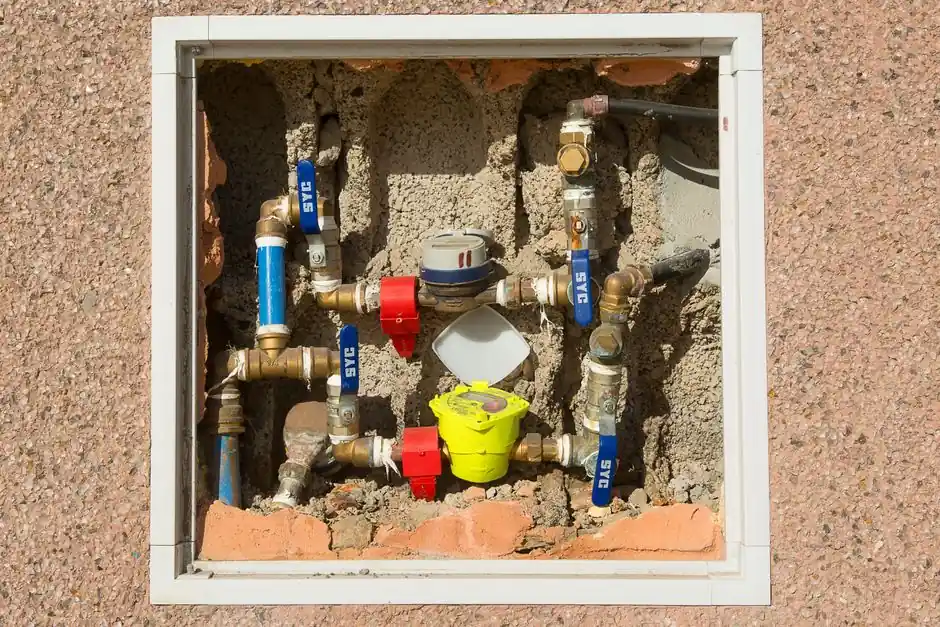
- Shut the main if the valve is seized. In older Lake Worth Beach homes, those little angle stops often freeze open. If yours will not turn, shut the main at the meter or the exterior shutoff.
- Pull the dishwasher out. Disconnect the drain hose from the disposal or the sink tailpiece, then slide the unit forward. Water trapped in the hose will spill, so have towels down first.
Once the water is off and the unit is out, you can see the actual source. Nine times out of ten it is one of three things: a cracked supply line, a loose compression fitting at the elbow, or a drain hose that has popped off the disposal nipple. If you are not sure what you are looking at, that is the moment to stop and call us rather than guess.
Why dishwasher leaks happen under the kitchen sink
Dishwasher leaks under the kitchen sink happen because the supply line, the drain hose, and the door gasket all degrade at different rates, and the cabinet hides the failure until water is already pooling on the cabinet floor.
The most common causes we see in this area:
- Braided supply line failure. The stainless braid hides a rubber core that hardens and splits. Most of these lines are rated for 5 years; we replace them at 5 to 7 whether they look fine or not.
- Loose compression fitting. Vibration from the wash cycle slowly backs the nut off the shutoff valve. A quarter turn with a wrench usually stops it, but the damage is already done to the cabinet.
- Drain hose popped off. If the hose is not clamped to the disposal nipple, it can blow off mid-cycle and dump a full tub of hot, soapy water into the cabinet in one shot.
- Door gasket and tub seal. These leak at the front, so you see water on the kitchen floor rather than inside the cabinet.
- Clogged air gap or disposal inlet. Water backs up the drain path and finds the lowest seam, which is usually the hose connection.
Salt air and humidity along the coast accelerate corrosion on brass fittings and steel clamps. A fitting that would last 15 years in a dry climate can pit through in 6 or 7 here. That is one reason we treat every dishwasher leak as a Plumbing Leak Water Damage Cleanup in Lake Worth Beach job, not just a hose swap - the water has already gone somewhere, and we need to find it.
How to dry out the cabinet and floor
How you dry the cabinet and floor in the first 24 hours decides whether you replace the cabinet base or just repaint it. Water wicks into the particleboard base, the toe kick, and the subfloor underneath, and it does not evaporate on its own in a closed cabinet.
Here is what actually works:
- Extract standing water. A wet/dry shop vac with a squeegee attachment pulls the bulk out of the cabinet floor and the toe kick seam.
- Remove the cabinet base panel if it is swollen. Particleboard that has swelled past about 1/8 inch will not go back. Cut it out now so the subfloor can dry.
- Drill weep holes. If water is trapped under the cabinet floor, 3/8-inch holes at the low corner let it drain and let air move through.
- Set air movement. A box fan aimed into the open cabinet plus a dehumidifier in the kitchen will dry most cabinet interiors in 2 to 4 days.
- Check the subfloor. If the plywood or OSB under the cabinet reads above 16 percent moisture on a pin meter, you need professional drying, not a fan.
Do not close the cabinet doors and walk away. Trapped moisture in a dark cabinet is exactly where mold likes to start. If the cabinet is against an exterior wall, the problem is worse - the wall cavity can hold water for weeks. That is when Wall Water Damage Drying in Lake Worth Beach becomes part of the job, because we have to dry the stud bay, not just the cabinet.
What to watch out for in the first 48 hours
In the first 48 hours after a dishwasher leak, watch for a musty smell, a soft spot in the floor near the toe kick, and any darkening of the cabinet base - those are the three signals that the water went deeper than the surface.
Specific things to check:
- Musty odor. If you smell it within 2 days, mold is already active. Do not paint over it.
- Soft floor. Press your thumb into the floor in front of the dishwasher. If it gives, the subfloor is compromised.
- Peeling cabinet veneer. The paper-thin veneer on the cabinet sides lifts first when moisture is still high.
- Bubbling paint on the wall. This means water traveled up the drywall behind the cabinet.
- Discolored toe kick. A dark line along the bottom of the cabinet is a classic sign of a slow leak that has been running for weeks.
If you see any of these, the leak has been going longer than you think. Slow dishwasher leaks are the worst kind because they feed mold quietly for months. We have pulled cabinets in homes off Lake Avenue and in the College Park area where the homeowner only noticed because the floor felt spongy underfoot.
Common mistakes homeowners make
The biggest mistake is treating a dishwasher leak as a plumbing-only problem and mopping up the visible water without drying the cabinet and subfloor. The second biggest is running the dishwasher again to "see if it still leaks."
Other mistakes we see regularly:
- Running the unit to test it. You just add another 2 to 4 gallons to an already wet cabinet. Fix the leak first, then test.
- Bleaching the cabinet. Bleach kills surface mold on non-porous materials, but it does not penetrate wood or drywall. It also does nothing for the moisture still inside.
- Putting a fan in and calling it done. Air movement without a dehumidifier just moves humid air around the kitchen.
- Ignoring the toe kick. The toe kick is the lowest point and the last thing to dry. If it is still wet after a week, the subfloor is still wet.
- Replacing the dishwasher without fixing the cabinet. The new unit goes in over a wet, moldy cabinet base and the problem comes right back.
One more: do not assume your homeowners policy will cover it. Sudden discharge from a supply line is usually covered; a slow leak that has been running for months is often excluded as lack of maintenance. Document everything with photos before you start tearing anything out.
When to call a professional
Call a professional when the water has reached the subfloor, when you smell mustiness, when the cabinet base is swollen, or when you cannot find the source of the leak after pulling the dishwasher out.
We handle these calls every week in Lake Worth Beach. Our technicians find the leak, extract the standing water, set drying equipment, and monitor moisture readings daily until the cabinet, wall, and subfloor are back to dry standard. We also handle the repair side - supply line replacement, cabinet base repair, and subfloor drying - so you are not coordinating three different trades.
If the leak came from a failed supply line and you want the whole job handled in one visit, our Appliance Leak Water Cleanup in Lake Worth Beach service covers extraction, drying, and the plumbing repair. If the dishwasher itself is done, we can also handle the Dishwasher Leak Water Removal in Lake Worth Beach side so the new unit goes into a dry, mold-free cabinet.
Frequently Asked Questions
How much does dishwasher leak water damage cleanup cost in Lake Worth Beach?
Typical 2026 pricing in this area runs $450 to $1,200 for a contained cabinet and floor dry-out, and $1,800 to $4,500 if the subfloor or wall cavity is involved. Most single-cabinet jobs are done in 3 to 4 days with drying equipment on site.
Can I just dry the cabinet with a fan and towels?
Only if the leak was small, caught within minutes, and the moisture meter reads under 16 percent after 24 hours. If the cabinet base is swollen or the subfloor is wet, a fan will not reach the water trapped underneath and mold will follow within 2 to 3 weeks.
Will my insurance cover a dishwasher leak?
Sudden discharge from a burst supply line or a hose that popped off is usually covered under standard Florida homeowners policies. Slow leaks that have been running for weeks are often denied as a maintenance issue. Photograph everything before you start cleanup.
How long does it take to dry out a kitchen after a dishwasher leak?
A contained cabinet and floor dry-out takes 3 to 4 days with professional air movers and a dehumidifier. If the wall cavity or subfloor is wet, plan on 5 to 7 days. We take moisture readings daily and do not pull equipment until the readings hit dry standard.
Does a dishwasher leak always mean mold?
No, but mold can start in 24 to 48 hours on wet drywall and in 48 to 72 hours on wet wood. If the leak was caught the same day and fully dried, mold risk is low. If it ran for a week or more, assume mold is present until testing says otherwise.
Get help with Water Damage Restoration in Lake Worth Beach
If your dishwasher has leaked under the kitchen sink and you are not sure how far the water traveled, we can be on site today to find the source, extract the standing water, and set drying equipment before mold gets a foothold. We handle the full job - plumbing repair, cabinet drying, subfloor drying, and moisture monitoring - so you are not juggling contractors.
Call (561) 760-4158 and we will walk you through what to do right now, even before we arrive.